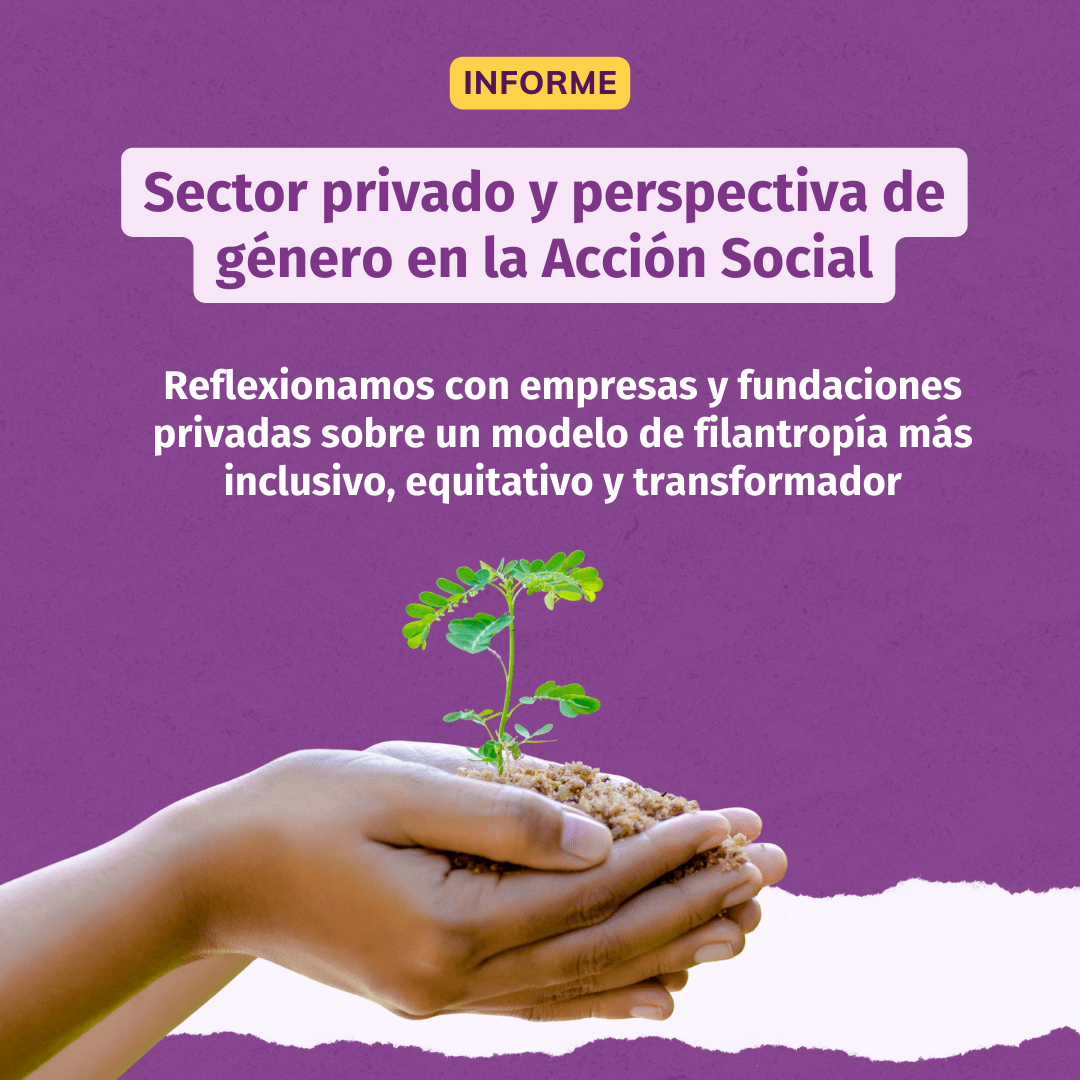
We find good practices, challenges and recommendations for more egalitarian private social investment models and a fairer distribution of resources.
We at Calala are excited to launch the first report on “Gender perspective in calls for proposals and support from the private sector to social organisations in Spain”.”, a pioneering analysis that reviews how companies and private foundations incorporate - or not - gender equality in their funding models and collaboration with social organisations. We have carried out an in-depth analysis of nine companies and private foundations recognised in the country, complemented by a review of practices in the sector.
Some conclusions of the report
- Gender equality is often present in internal diversity and inclusion policies in private organisations, although it is rarely incorporated as a structural criterion in calls for proposals, partnerships or social project evaluation processes.
- Administrative complexity, the requirement of previous experience or the need for co-financing limit the participation of small and grassroots organisations, reproducing existing inequalities in the social ecosystem.
- Funding decisions are often concentrated in internal teams, without the involvement of expert women's or LBTIQ+ organisations who know the needs of women and LBTIQ+ groups intimately.
- Many private entities are committed to projects with a social impact, although they tend to support projects that are shorter term or of a welfare nature. One opportunity could be for the private sector to take the initiative to innovate and support transformative projects that fill gaps that other partners do not cover.
This report is the result of of joint work with private organisations with whom we share values and a strong commitment to equality and social diversity.
Why is this analysis necessary?
Women's social organisations and LBTIQ+, in Spain and globally, have played a key role in the recognition of human rights and in the advancement of the United Nations Sustainable Development Goals. Their work has made it possible to advance equality policies and bring about social and cultural structural changes over the years. They have achieved historic achievements such as the right to vote, to divorce, to choose maternity, to access the labour market, to work-life balance and co-responsibility. However, these organisations are threatened by social stigmas, hate speeches and also by the lack of public and private economic resources, which today are more evident in a very turbulent global political and economic context.
In terms of private sector funding in Spain, although many companies and foundations have made great efforts to include equality and diversity policies in their organisations, this perspective is rarely incorporated in calls for proposals, partnerships or investment in women's or LBTIQ+ social projects. Although projects related to women's issues such as gender-based violence, empowerment or leadership tend to be financed, the funding mechanisms are not always inclusive of organisations led by women and other groups that have historically been discriminated against. Nor do they usually take into account specific needs or lines of action for women living with combined problems such as poverty, origin, gender, among others. This is covered in more depth in the report we are presenting today..
On the other hand, many private funding models make it difficult for less structured organisations to access resources due to the complexity of the requirements or excessive technicality, which only large third sector organisations can meet, thus reproducing inequalities in the distribution of resources, as revealed by our research on “Access to funding for women's and feminist organisations in Spain”.” 2023.
In this context, rethinking how private funding is designed, channelled and evaluated becomes a strategic opportunity for companies and foundations, not only to strengthen the coherence between their values and their social action, but also to increase the real impact of their investment in equality and diversity.
It is also an opportunity for private organisations to contribute to the sustainability of organisations that generate long-term structural, cultural and environmental changes through activities and projects that are not only limited to the field of assistance, but that generate social transformation for a fairer, more egalitarian and more appealing world.
Why partner with the private sector?
Calala is the only feminist fund in Spain, which for more than 16 years has been mobilising resources to strengthen women's and LBTIQ+ organisations, networks and movements here and in Central America. Our mission is to promote rights, autonomy and leadership through funding, training and accompaniment. We believe that the private sector, with its financial, knowledge and other contributions, is a fundamental ally in our work and in empowering the hundreds of women's and LBTIQ+ groups we support, along with the people they serve with their services, to decide the lives we want.

 Spanish
  English